VELORA MOBILITY LIMITED · Investor brief · August 2026
The company is already moving.
MOTO RIDES is a live mobility platform in Chuka, Embu and Meru. Riders book in the app. Driver-partners are verified before they are approved. The fare is known before the trip and settled on M-Pesa. This round is fuel for density, a production data layer, and a city-launch method worth repeating.

- Operating cities
- Chuka · Embu · Meru
- Take on a completed ride
- 18%
- Driver-partner share
- 82%
- Growth round
- KES 13,000,000
Thesis
Everyday local transport, made verifiable, cashless and repeatable.
Secondary cities already move. The movement is fragmented: driver quality varies, the price is uncertain until the journey is underway, the trip itself is hard to see, and cash still sits between the rider and a record of the work. Driver-partners, for their part, meet uneven demand and have little in the way of a digital book of earnings.
MOTO RIDES is the layer that gives that movement a record. The company earns an 18% commission on completed rides. The driver-partner keeps 82%, before their own tax. Food Dash and Scoobix parcels are live beside the ride, so a household has more than one reason to open the same app. The planning case below prices the ride commission. The other two services widen the habit.
The method is deliberate. Win density in a city. Learn the retention and the contribution. Open the next city with the same verification, the same payments and the same safety standard. Capital accelerates a company that has already left the drawing board.
In market
What a customer can use today
Ride hailing
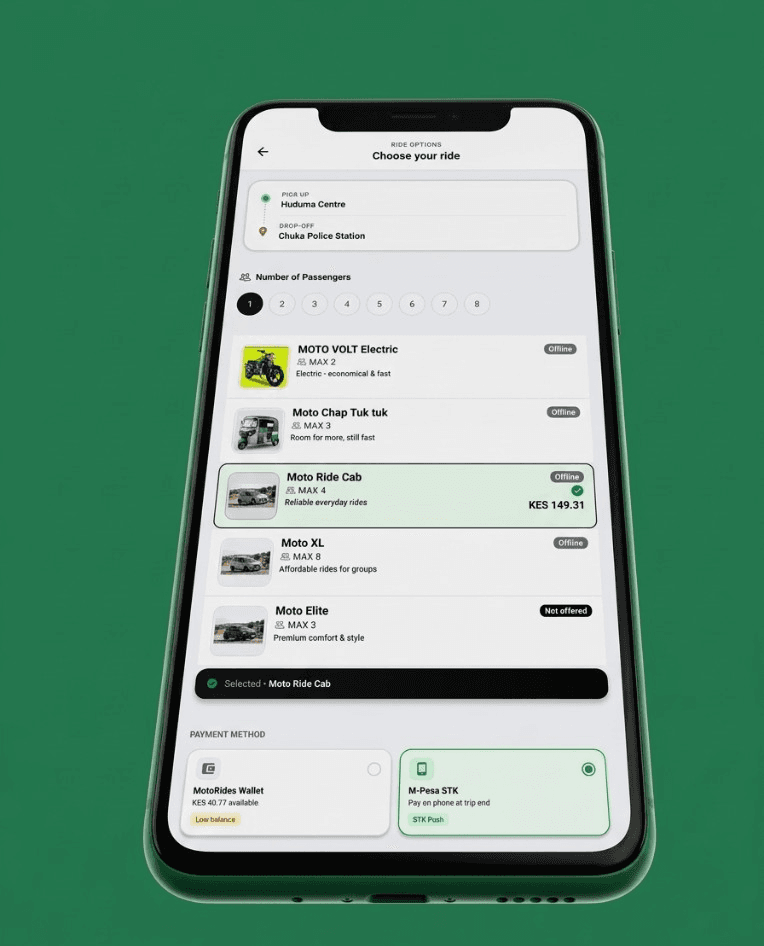
LiveElectric bikes, tuk-tuks, cabs, Moto XL and Moto Elite, booked in the app.
Food Dash
LiveMeals from local kitchens, paid in the app and followed to the door.
Scoobix parcels
LiveDoor-to-door parcels with live tracking and a handover PIN.
M-Pesa
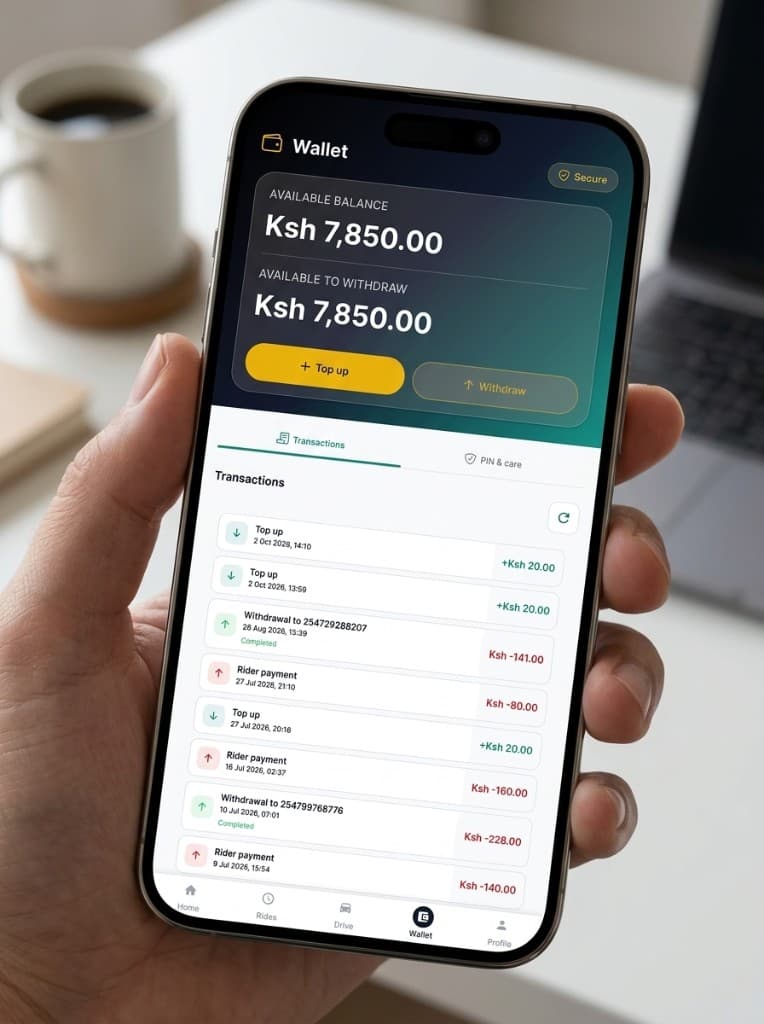
LiveUpfront fare, STK Push, and driver withdrawals inside the app.
Verification
LiveIdentity and vehicle documents reviewed before a driver-partner is approved.
Live tracking
LiveGPS on the trip, with ratings and in-app emergency support.
RIDES POINTS
LiveA loyalty layer on completed rides, built for repeat use.
iOS application
In reviewSubmitted to Apple. Android is already public on Google Play.
Market
A national habit. A local wedge.
Kenya’s everyday mobility economy is large, habitual and still lightly formalised. Industry reporting in 2025 placed the boda-boda sector near KES 660 billion a year, with more than 2.5 million people depending on it. TIFA research reported in August 2026 estimated KES 126–147 billion in annual driver earnings across ride-hailing, and 300,000–350,000 active ride-hailing drivers.
Those figures describe the country. They are not MOTO RIDES revenue. The company’s first customers are students, residents, workers, shoppers and small businesses in Chuka, Embu and Meru: people who already pay to move, and who can be served by a product built for their towns rather than imported from a capital-city template.
M-Pesa has already taught the payment. Riders increasingly expect a live location, a receipt and a price that does not change after they sit down. Attention on safety and on the livelihood of the rider makes a verified, recorded network more valuable than an informal one. The product that captures that shift is already public.
Industry context · not company revenue
The market already spends at national scale
Boda-boda economy
KES 660 billion
Annual sector estimate, 2025 industry reporting
Ride-hailing driver earnings
KES 126–147 billion
Annual earnings range, TIFA Research, August 2026
- People in the boda economy
- 2.5 million+
- Active ride-hailing drivers
- 300–350k
Footprint
Three cities, open. The next ones earn their turn.
Chuka, Embu and Meru are the operating network. A new city is a decision that follows density, retention and a contribution margin that can carry local support — not a pin dropped ahead of supply. The same standard of verification, payment and safety travels with every city that follows.
- 2026In market. Chuka, Embu and Meru are open. The Android app is public. Trips settle on M-Pesa. Driver-partners are verified before they work.
- 2027Density. The planning case carries the network toward 100 active driver-partners, with forecasting and matching in daily use and the first business accounts opening.
- 2028A second city wave. Further cities are opened on the same verification, payments and safety system, after the first three can carry their local cost.
- 2029One corridor. Eastern Kenya and neighbouring secondary cities operating as a single network, with business travel as a steadier book of trips.
- 2030A repeatable platform. A secondary-city network across Kenya whose advantage is its record: verified supply, cashless trips, and a launch method that has been used more than once.
2026 describes the company as it operates. 2027 follows the planning case. 2028 to 2030 are the expansion sequence, not a revenue forecast.
Driver matched
Arriving in 4 min
Optimized corridor
Traffic-aware route simulation
Model
One commission, taken when the ride is completed.
Revenue today is straightforward. The platform takes 18% of a completed ride fare. Enterprise mobility, local merchant reach, and privacy-safe aggregated intelligence are later lines. They are named here so the direction is clear. They are not booked in the planning case.
Live economics
Eighteen percent. The rest goes to the driver.
- 82% to the driver-partner on a completed ride, before that driver-partner’s own tax.
- 18% to the platform. This is the company’s commission on completed rides today.
| Stream | Standing |
|---|---|
| Ride commission | Live. 18% of the completed fare. Volume times fare is the engine. |
| Business mobility | Planned. Accounts for firms and institutions that move people on a schedule. |
| Merchant reach | Planned. Local partners using the same network that already carries meals and parcels. |
| Intelligence products | Later. Aggregated, privacy-safe signals. A margin line only after density exists. |
Operating base
Two months public. A cohort already on the platform.
Within 2 months of public release, the company reports 124 users and 20 active driver-partners in Meru. The counts are founder-reported and unaudited. They are the start of a network, stated plainly, and they sit under a product that is already listed, already taking M-Pesa, and already verifying the people who drive.
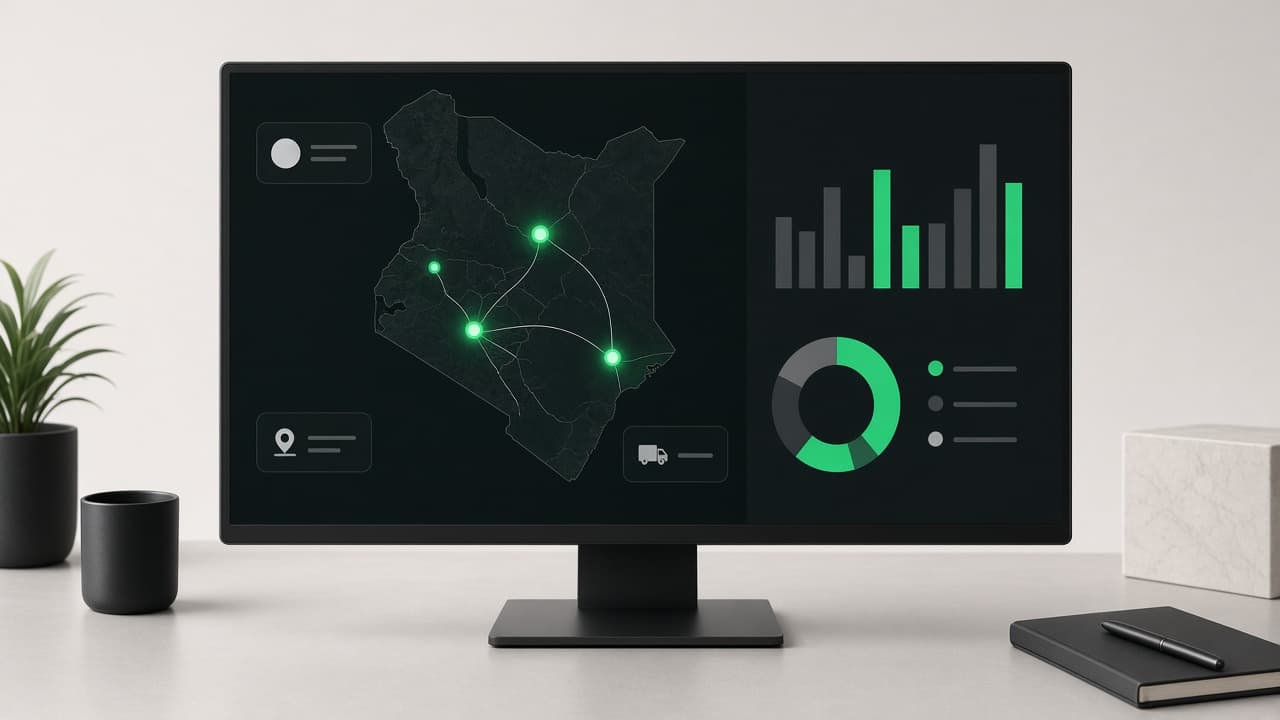
Planning console
Illustrative case · not historical results
- Reported users
- 124
- First two months
- Active drivers, Meru
- 20
- Founder-reported
- Cities open
- 3
- Chuka, Embu, Meru
- Android
- Public
- Google Play · VELORA MOBILITY LIMITED
Active driver-partners
From a working base to a denser network
The black bar is the present Meru cohort. The green bars are the month-12 and month-24 planning case. They are not results already achieved.
Planning case
Month 12 and month 24, if density is earned.
The charts are a management case prepared for planning. They are not a record of revenue, and they are not a promise. Average completed fare is held at KES 220. The platform commission stays at 18%. Each month is counted as 30 operating days. Month 12 assumes 100 active driver-partners and 10 completed rides per driver per day. Month 24 assumes 250 driver-partners and 12 completed rides per driver per day.
Completed rides / month
30,000
Month 12
90,000
Month 24
Gross ride value / month
KES 6,600,000
Month 12
KES 19,800,000
Month 24
Platform revenue / month
KES 1,188,000
Month 12
KES 3,564,000
Month 24
| Monthly run-rate | Month 12 case | Month 24 case | How it is built |
|---|---|---|---|
| Completed rides | 30,000 | 90,000 | Drivers × rides per day × 30 |
| Gross ride value | KES 6,600,000 | KES 19,800,000 | Rides × KES 220 |
| Platform revenue | KES 1,188,000 | KES 3,564,000 | Gross ride value × 18% |
| Operating expenses | KES 1,000,000 | KES 2,500,000 | Planning assumption |
| Illustrative surplus | KES 188,000 | KES 1,064,000 | Revenue minus the assumed expenses |
Utilisation
More completed rides from the same active driver, by placing supply where the demand already is.
Retention
Repeat riders, referrals and local partnerships, so the cost of winning a customer falls as the city matures.
A steadier book
Business accounts that order movement on purpose, and automation that takes cost out of support, fraud review and dispatch.
The round
KES 13,000,000 to deepen what is open, and to make the next city ordinary.
The round is sized to the work in front of the company. It deepens supply where MOTO RIDES already operates, puts a production data layer under that supply, and pays for the people and the reserve a second wave of cities will require. Further capital, if an investor wishes to underwrite a wider build, would be staged against density. The company spends behind proof.
Open a discussionAllocation of the round
KES 13,000,000
- Product, reliability and the data layer25%
- Marketing, merchandise and brand25%
- Driver supply and city operations16.7%
- Rider growth and partnerships8.3%
- Safety, compliance and support8.3%
- Specialist capacity8.3%
- Working capital8.3%
Product, reliability and the data layer
KES 3,250,000
Demand forecasting, matching, analytics, and the reliability of a platform that already takes live trips.
Marketing, merchandise and brand
KES 3,250,000
A driver-partner who is visibly MOTO RIDES. Appearance, trust, and a brand that travels with the supply.
Driver supply and city operations
KES 2,166,667
Denser supply in the cities already open, and an onboarding method that can be used in the next city.
Rider growth and partnerships
KES 1,083,333
Referrals, community partnerships, and the first business accounts.
Safety, compliance and support
KES 1,083,333
Verification, support, incident response, and the controls a marketplace owes the people who use it.
Specialist capacity
KES 1,083,334
City operations, growth, finance and engineering capacity beside the founder.
Working capital
KES 1,083,333
A reserve for the ordinary unevenness of launching and deepening a city.
Intelligence
The data layer is the work of this round.
The marketplace is live. The operating intelligence around it is the next build: trip history, pickup and drop-off patterns, driver availability, cancellations and safety events, turned into decisions. These capabilities are funded work. They are not presented as features already shipped.
Demand forecasting
Expected trips by hour, place and vehicle, so supply is positioned before the request arrives.
Matching
A dispatch rule that weighs arrival time, reliability, driver utilisation and the rider’s experience.
Risk signals
Behavioural and trip anomalies scored for fraud and safety, with a person reviewing sensitive decisions.
Support triage
Common ride, payment and account issues handled before they consume the operations team.
City dashboards
Retention, unit economics and driver performance, read city by city before a new city is opened.
Leadership
Founder-led. Built in-house.

Alex Muhoro
Founder and Chief Executive Officer · Principal engineer
Alex Muhoro designed and built the platform that is now in market: the rider experience, the driver tools, the payments and the service running in Chuka, Embu and Meru. He knows the first city as a resident of its daily movement. The round puts a bench beside him — city operations, safety and support, growth, and finance — so the founder can remain on the product and the expansion.
Evidence
On the public record
- motorides.app — product, cities, terms and contact.
- Google Play — Moto Rides, developer of record VELORA MOBILITY LIMITED.
- Terms — platform role, the 18% commission, payments and safety.
- Privacy — location, payments and security.
VELORA MOBILITY LIMITED is the developer named on the public app listing. Corporate registration papers are held for a private data room and are not reproduced on this page. The iOS application is with Apple for review.
Discussion
The memorandum follows a conversation.
Investors who understand local marketplaces, and who are prepared to underwrite the next stage of a company already in service, are invited to write directly.
This page is an operating brief. It is not an offer of securities, and it is not a solicitation to the public. Industry figures are third-party estimates of the Kenyan mobility economy and are not revenue of VELORA MOBILITY LIMITED. User and driver counts are founder-reported and unaudited. Month-12 and month-24 figures, including the illustrative surplus, are a planning case. Years after 2027 describe sequence and intent. Operating metrics, registration documents and a full memorandum are shared in a private discussion.